

Last Modified:
Prenatal appointments are a lot for anyone. Not only are they often rushed, emotionally loaded, and physically draining, but the sheer number of appointments can be daunting. When you’re pregnant and living with a chronic illness, it can feel like an entirely new level of overwhelming.
There’s the mental prep. The physical energy it takes just to show up. The anxiety of whether you’ll be heard or dismissed. The exhaustion that hits before, during, and after. And the quiet grief of realizing this pregnancy experience doesn’t look the way you imagined it would.
If you’ve ever sat in your car after an appointment feeling depleted, overstimulated, or have more questions than when you arrived, you’re not alone. Navigating prenatal appointments with chronic illness requires more energy, planning, and self-advocacy than most people realize.
This post is here to guide you through the process. There is no “perfect” or “better” way to manage the appointments and chronic illness. There is only treating yourself with compassion, practicality, and grace.
Why Prenatal Appointments Are Harder With Chronic Illness
Pregnancy appointments are designed with a very specific type of patient in mind: someone with predictable energy levels, minimal medical history, and the ability to absorb a lot of information quickly. And if you are chronically ill, the system often fails to successfully support you.
Prenatal appointments with chronic illness can be difficult for many reasons, including:
- Fatigue that makes even getting dressed feel like a task
- Brain fog that makes it hard to remember symptoms or questions
- Pain and discomfort that worsens with sitting, waiting, or exams
- Anxiety from past medical trauma or dismissal
- Multiple conditions being affected by pregnancy
- Short appointment times that don’t allow for nuance
Add pregnancy hormones, further sleep disruptions, and emotional vulnerability to the mix, and it’s no wonder these appointments can feel like going up against the super boss in Super Mario Kart.
You’re not lazy or a “difficult patient.” You’re navigating a system that isn’t built for individuals with dynamic disabilities.
Preparing Before the Appointment (Without Overdoing It)
One of the biggest energy drains of prenatal care is not the appointment itself; it’s everything else that comes with it. Preparation doesn’t mean you need to do more. It means doing what supports you best.
Write things down ahead of time
Trying to remember symptoms or questions in the moment can be incredibly difficult, especially if brain fog or anxiety kicks in. A few days before your appointment, consider jotting down:
- New or worsening symptoms
- Questions you don’t want to forget
- Medications or supplements you’re taking
- Concerns you’ve been carrying mentally
This can live in your phone notes, a notebook, or a printed checklist, whatever works best for you. Ensure that you prioritize without overwhelming yourself. You don’t have to cover everything in one visit.
Pick 1–3 top priorities you want addressed. If time or energy runs out, you’ll still have advocated for the things that matter most in that moment.
Schedule for your best energy window (if possible)
If you have more energy in the morning or afternoon, try to schedule appointments during that window. Though this isn’t always possible, it can make a noticeable difference.
Bring support (in any form)
Support doesn’t always mean another person (though that can definitely help). It can look like:
- Notes written ahead of time
- A checklist to reference
- Permission to ask for clarification
- Allowing yourself to say, “I need a moment”
Advocating for Yourself During Prenatal Appointments
Self-advocacy can be exhausting, especially when you’re already tired. But small moments of clarity and communication can make appointments more productive, less draining, and leave you with better clarity.
It’s okay to slow things down
Medical appointments often move quickly. You are allowed to ask for pauses and clarification.
Simple phrases like:
- “Can you explain that a little more?”
- “I want to make sure I understand.”
- “Could you repeat that?”
These aren’t inconveniences, they’re part of good care.
If you do not feel comfortable with your ability to remember what your doctor spoke to you about, you can always request permission from your provider to take an audio recording of the appointment for you to reference later.
Ask how pregnancy affects your existing conditions
If you live with a chronic illness, pregnancy may impact your body differently than you would expect. It is important that you know what to keep an eye out for or what signs indicate you need to be seen immediately.
Some helpful questions include:
- “How might pregnancy affect this condition?”
- “Are there symptoms I should be watching for?”
- “What changes would warrant a call between appointments?”
Request documentation
If something feels important, it’s okay to ask for it to be noted in your chart. This can help later if concerns arise or providers change.
You might say:
- “Can we make sure this symptom is documented?”
- “I want this noted since it’s an ongoing issue.”
Managing Appointments When You’re Exhausted or Overstimulated
There may be days when you show up already drained, and you don’t know how you’re supposed to make it through the appointment without forgetting everything. It doesn’t mean the appointment is a failure; it just means that you need to reference your support tools.
When brain fog hits mid-appointment
If your thoughts disappear or you lose track:
- Refer back to your notes
- Ask for written summaries
- Say, “I’m having trouble processing right now — could you summarize that?”
Sensory overload is real
Bright lights, sounds, pressure cuffs, and conversations can be a lot.
If you need to:
- Close your eyes
- Take a few deep breaths
- Ask for quiet
- Ask to dim the lights
Give yourself permission to forget things
You can always follow up later. You don’t need to cover everything perfectly in one visit, most of the time you won’t have the time anyway. If you need or want to, you can:
- Schedule multiple appointments
- Send your doctor an email with any follow-up questions or concerns
- Request that your doctor follow up with you with an appointment summary page
A Gentle Tool That’s Helped Me Feel More Prepared
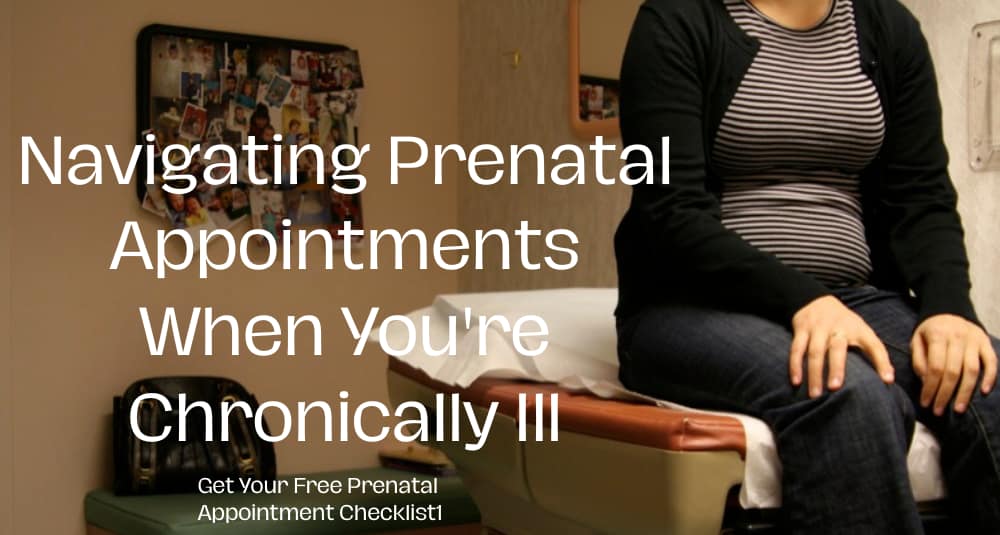
One thing that has made prenatal appointments feel less overwhelming for me is having everything written down in one place. That’s why I created a Prenatal Appointment Prep Checklist, not as another thing to “do,” but as a gentle support tool.
It includes:
- Space to list symptoms
- Questions you want to ask
- Notes for during the appointment
- Follow-up reminders
You can print it, save it on your phone, or use it however works best for you.
👉 If you’d like the checklist, you can sign up for my newsletter and have it sent straight to your inbox.
No pressure, no spam, just gentle support when you need it.
After the Appointment: Recovery Matters Too
Appointments don’t end when you leave the building.
For chronically ill bodies, the after can be just as important.
Plan low-demand time afterward.
If possible, try to avoid scheduling too many appointments back-to-back. Even ones that seem “easy” can be draining.
Rest isn’t a reward; it’s part of self-care that allows you to show up for yourself and your baby.
Write things down while fresh.
If you have the energy, jot down:
- What was discussed
- Any follow-up steps
- Next appointment date
- How you felt afterward
This can help later when details fade.
Emotional decompression is just as important!
Appointments can bring relief, anxiety, grief, or frustration, and all of it is valid. You’re allowed to feel complicated things about your pregnancy experience. Sometimes you just need to take a moment in your car to breathe, cry, or scream, and that is okay.
You’re Not Doing This Wrong
There is no perfect way to navigate prenatal appointments when you’re chronically ill. Some days you’ll be proud of how well you advocated for yourself and your baby. Other days, you’ll forget half your questions and be lucky you even remember you have an appointment. Some appointments will feel supported by your provider, and others may feel disappointing.
None of that means you’re failing.
Pregnancy with chronic illness is layered and nuanced. Your body is doing something incredibly demanding while already managing a lot. You deserve care that acknowledges that complexity. If nothing else, know this: showing up, even imperfectly, counts.
If prenatal care feels overwhelming, isolating, or exhausting, you don’t have to navigate it alone.
Through my newsletter, I share:
- Honest reflections on pregnancy and chronic illness
- Practical tools like the Prenatal Appointment Checklist
- Gentle reminders that rest is valid and support matters
🤍 You’re always welcome here.


Leave a Reply